
PARAGONE
Individual show at Pal Project, Paris, text by Yasmine Helou; text by Eugénie Bey. 12 / 2022.
All you need are a few minutes with Mateo Revillo to let go of preconceived realities and let your spirit dance to the echo of his multiple voices. In this sense, our last exchange took me to the Naples of the Renaissance, when Jesuits were being exiled from the kingdom and alchemists were shining through their inventiveness… Mysteries and esoterism, politics, intrigues and superstitions… Anyhow… I am losing track of my own lucubrations! All this to say that with Mateo Revillo, there is no beginning or end, the dawn melts into the twilight and vice versa, exactly like the compositions on display which, through repetition, inexorably find variation. [Read more]
To access archeological excavations where the ruins are part of a history yet to be lived is to navigate through the mediterranean peregrinations of Mateo Revillo. Archeologist of the future, anchored in the past, he draws, paints, sculpts, composes, breaks, recomposes, transforms, and imagines –under a strangely sincere baroque influence– multifaceted aesthetic scenarios that embrace precise architecture and broad surroundings.
As put by Walter Benjamin “Each era dreams of the next”, just like the “shards” that structure the produced images. They, therefore, show themselves to be infinitely malleable, proving that the break is not an end. On the contrary, the interruption, therefore appears as an absolute succession of possibilities, which, depending on the angle taken, may sometimes appear gentle and peaceful, sometimes aggressive and in a certain manner violent, a little bit like this Mediterranean basin that so intensely taints the artist’s experimentations. Between the andalusian traditions of azulejos ceramics, the mauresque architecture and geometrical art, and more widely the History of Occidental Art, but above all, the more neglected ones of North Africa and the Levant, the paintings encompass several artistic and historical symbolisms. The atmosphere thus created seems to be suspended in a time which is not, but which may be…
If this exhibition recalls by its title a will to structure and arrange following the importance of painting, sculpture, poetry or even architecture, it only demonstrates their correlation, interdependence and, if I may say, “solidarity” …
The Paragone doesn’t hierarchize anymore, it organizes.
Mateo Revillo, (as a rightful Philosophical heir of 16th- century neapolitan alchemists) takes possession of his History only to tell new ones. He grounds his artistic practice and philosophy at the crossroad of diverse forms of creation… Hence becoming a true generator of situations, artisan of elastic and multiple horizons.
Oh, and did we forget to mention the apostolic snails? Mateo Revillo does not need an Ariadne’s thread, only cosmic ironies and seasonal wisdom.
Yasmine Helou.
_________
Paragone is that aesthetic debate from Italian Renaissance, that would compare the arts to one another; it concerned painting and sculpture particularly, but also architecture. Which one is deemed superior to the others? Which art is subdued to which? What technique would give a fairer account of the Real and pay homage to Nature the better? Which art would allow to caress the sun closer?
But that art parallelism essentially separates the arts.
In this illustrious research, each art is necessarily unique in its form as in its goal.
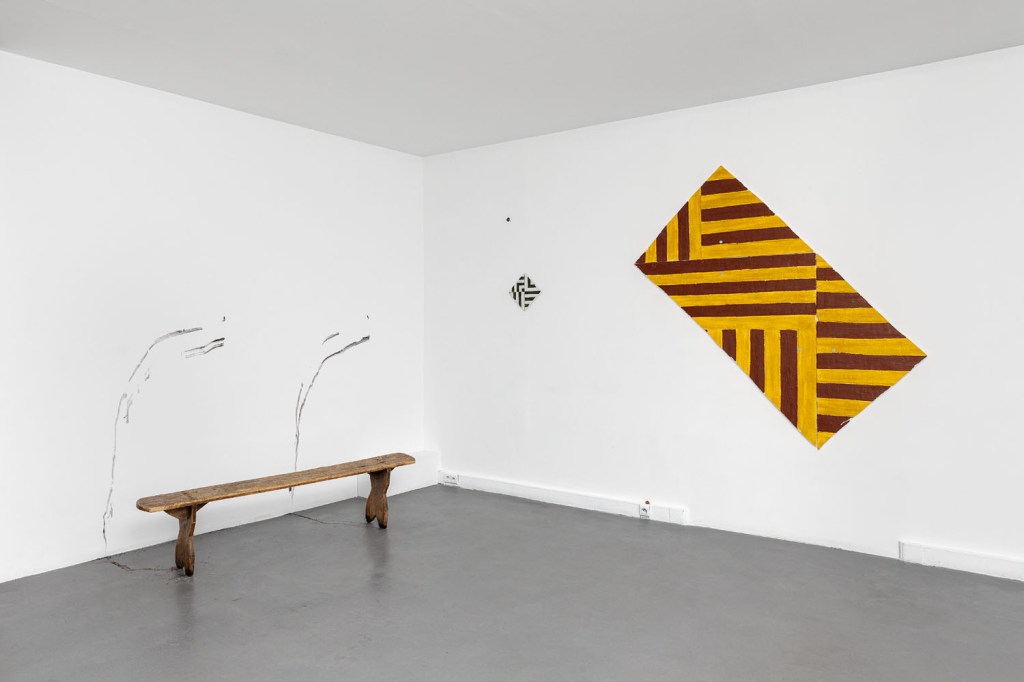
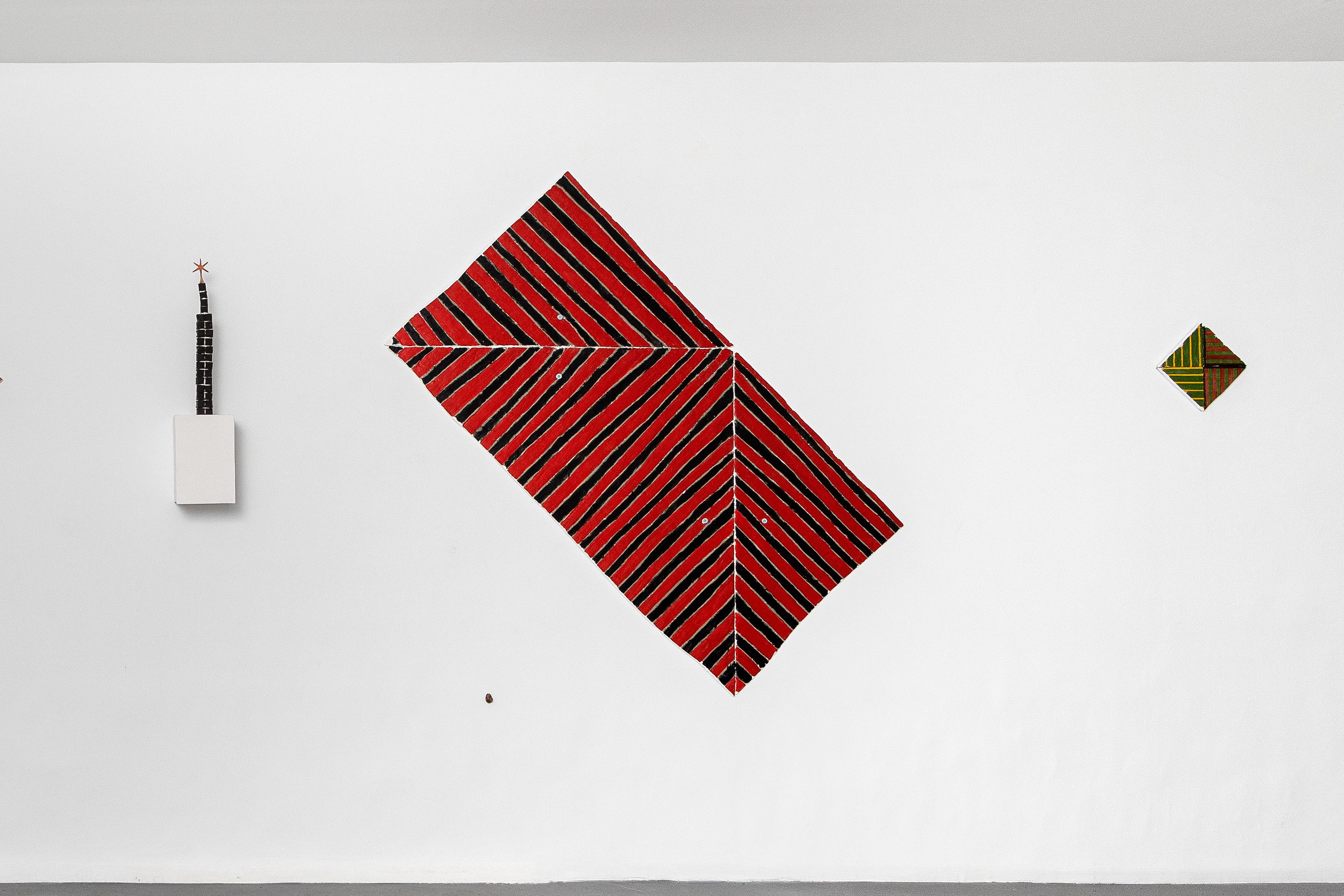
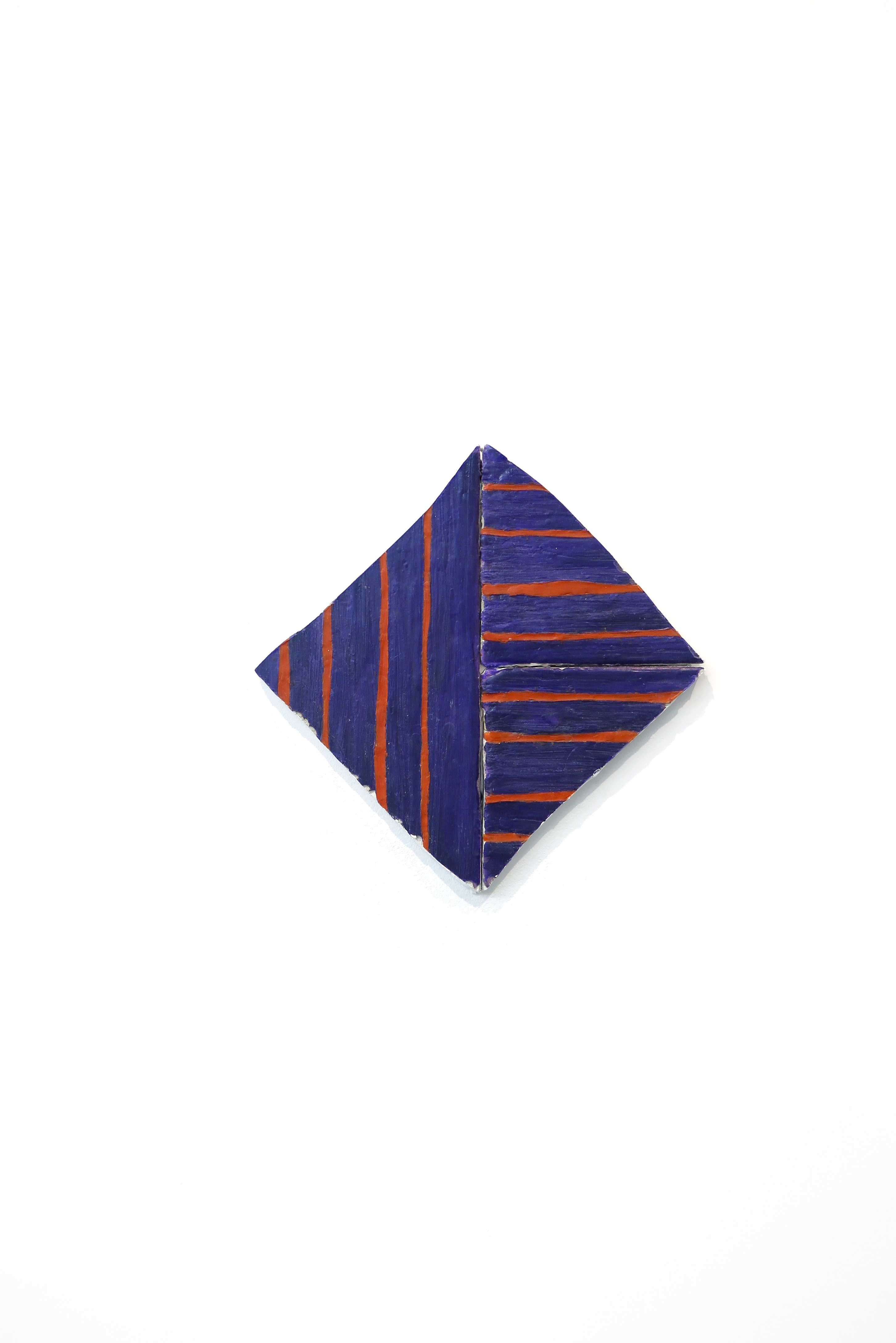
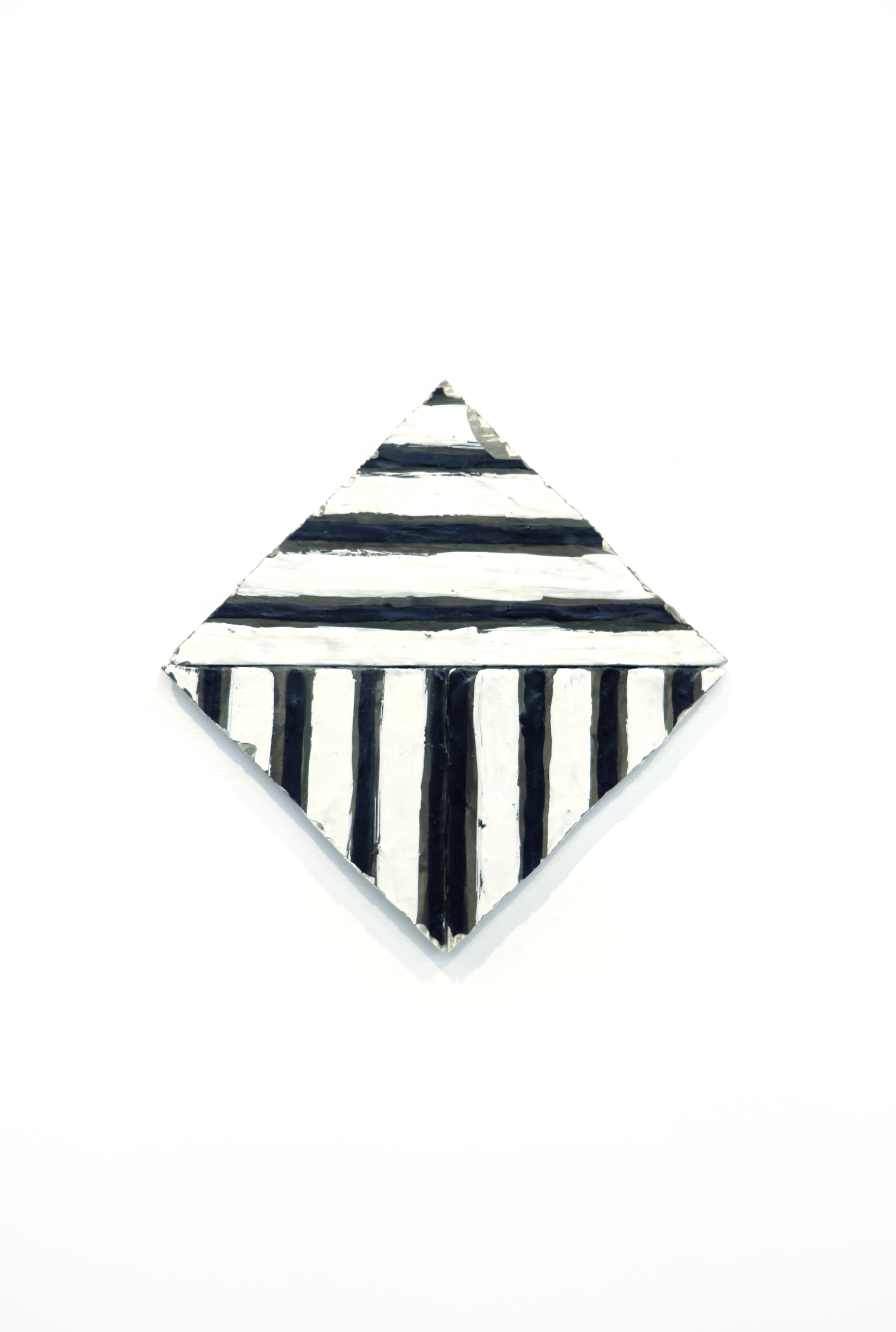
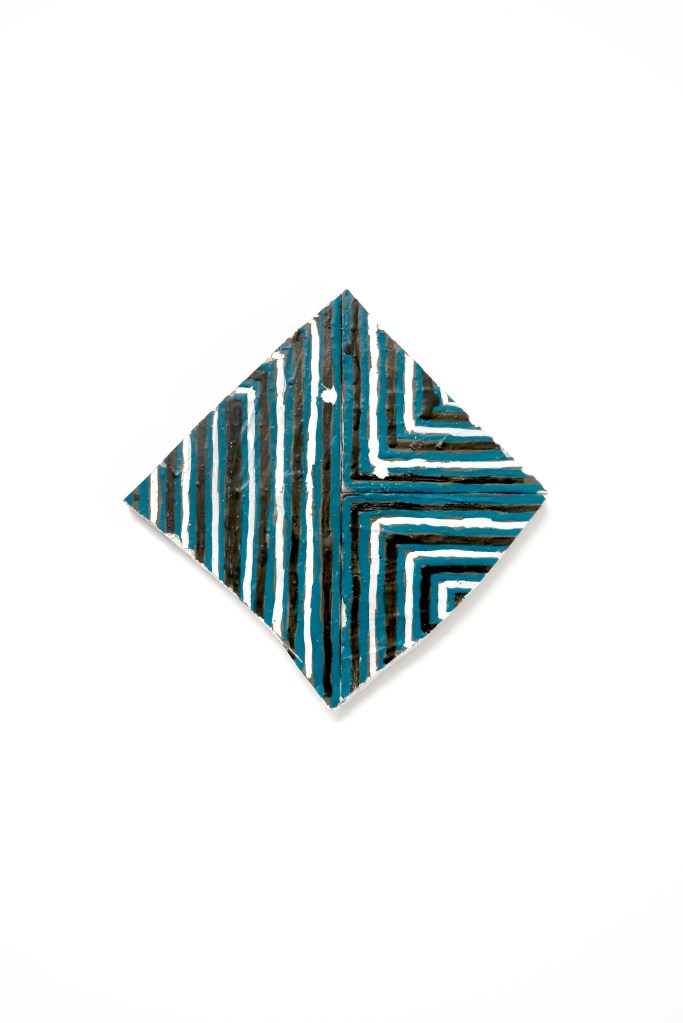
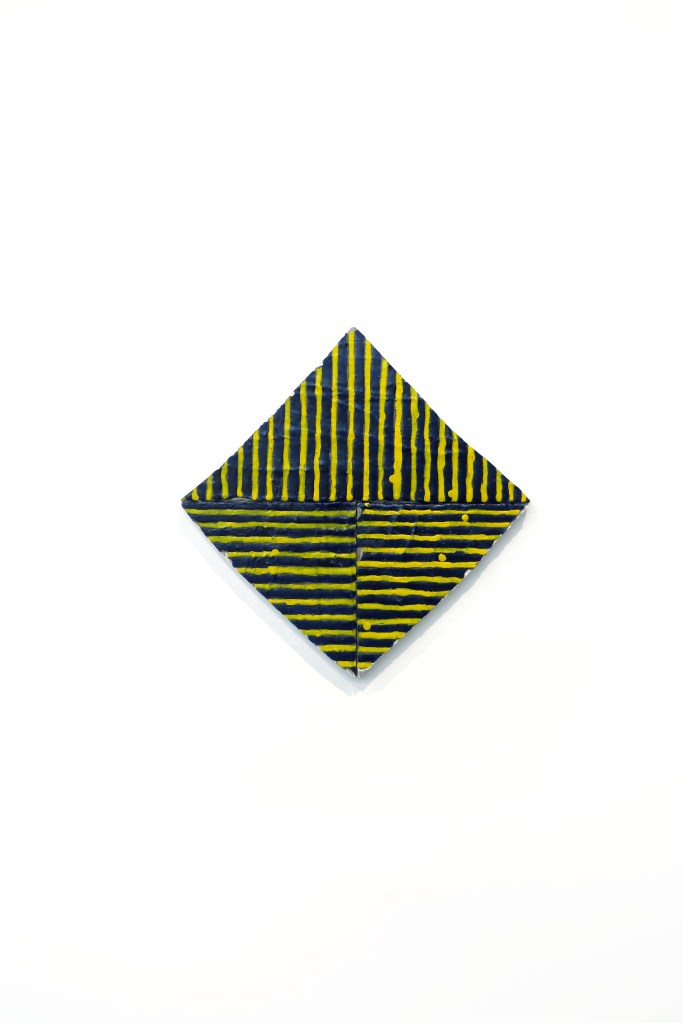
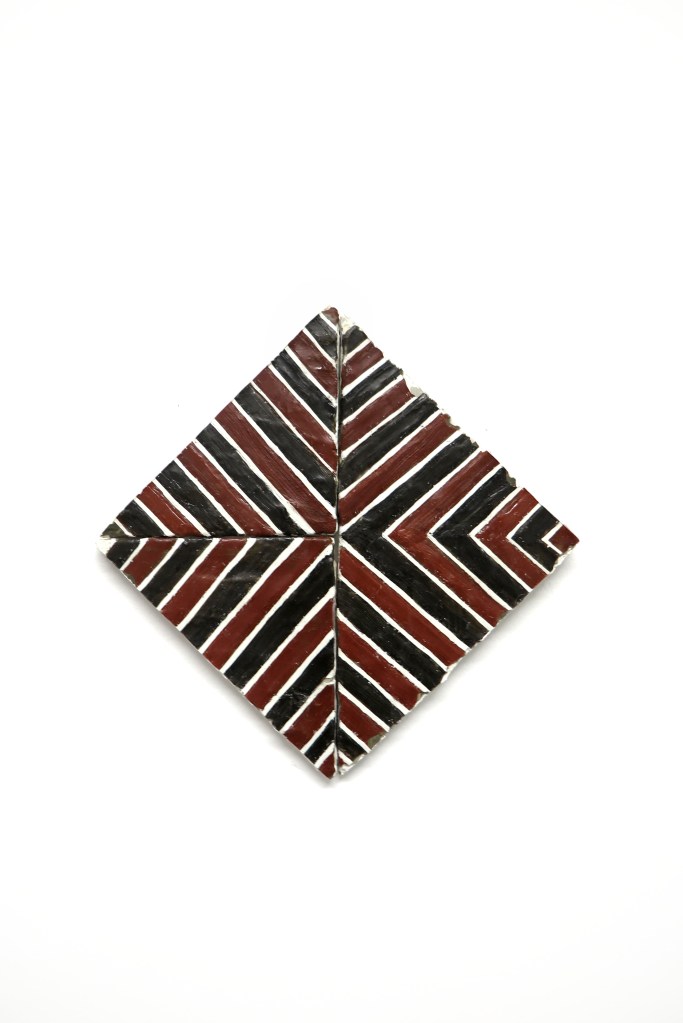
In his exhibition, Mateo is proposing the opposite. A total correspondence. Works that pierce through every fine art classification. His paintings on cement and plaster play with architecture as a technique and flirt with its goal: they are laid over the walls alike ceramic tiles, they want to marry and adorn the wall at the same time, be one with the walls. Body or decor? Paintings as room components.
They do not loose, however, the primal aesthetic use of painting in regard to light and colour effects, in the movement and the shape they present.
At the same time, these paintings are a construction that originates in their own deconstruction. When are they finished? Painted, deconstructed, rearranged, they hold the idea of infinite, of vortex… of the World.
That grand endless loop in which everything is born, dies, rots, is born again, grows, always taking a new form…
These paintings express the living, since they depict, making visible, constant change. Change, the articulation of the cosmos, is simply and brutally revealed, available.
Mateo has no intention to impose a singular, distinct painting and plays with its correspondence to sculpture and architecture together.
Here, these three arts are united in their aim even further than than in their form: that goal being the infinite, the Absolute. United in their will of to report a symbolism, a divine nature, a pantheism.
The simple material fact of the beeswax colouring each cement and plaster plaque fixes this entire symbolism.
A contemporary action inscribed in one of the most classical yearnings.
The Paragone paintings also exceed the limits of conventional plastic arts. They are not reduced to the space they occupy, or the space they create and represent: they play with time.
The exhibition truly questions the action of art in its spatiotemporal relation. Can visual arts be inscribed in time? Yes.
There is a visual rhythm in the hanging go the exhibition and a rhythm that belongs to the work itself. This construction made of vestiges, its relation to a time that is being deployed, exposed, made palpable and visible.
The simple idea of paint as fragment makes one think of music notes. Painting as music, a subject well researched by Kandinsky and his Colored hearing.
Mateo’s paintings simply represent time. They give a space to time. Without pretension, the architecture of his painting shows the instant and eternity, movement and displacement in space. Time and space in their entirety. The sensible experience of the world folding back on itself, easily, clearly.
Paragone reconciliares the arts in a single and evident goal. The arts give an account of the living, of the Real in its vital flow and infinite movements. They transmit a sensible reality with the aim of showing us what is beyond. Chaos within the order.
In his poem Correspondances, Baudelaire justly expresses the idea of synesthesia, not as a neurological disturbance of sensations (in which the subject feels two sensations associated to a single stimulus), but as the reality of the sensible world. Because each sensation finally corresponds to another without us being capable of experiencing it normally.
The artist stands as intermediary between nature and mankind. He casts light on a plural world and unifies it, broadening the field of our limited natural perception. That is what Paragone has to offer us.
Eugénie Bey


 Mateo Revillo