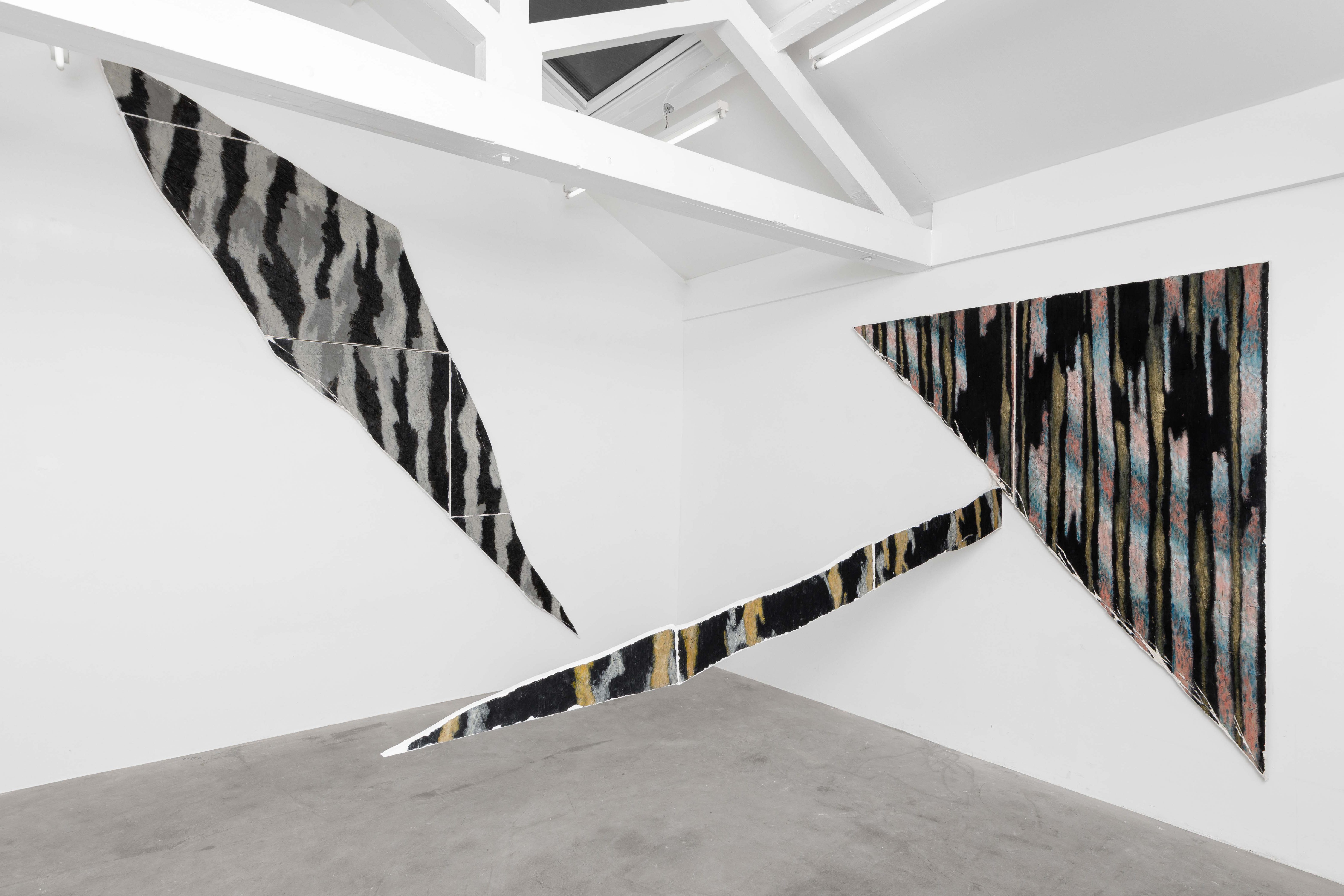
FORMS HAVE ATTITUDE
draw open bodies colours close
Text and curation by Christian Domínguez Dietzel. NISO, New Cavendish street, London, UK. 05 / 2025.
Mateo Revillo’s exhibition at NISO continues the gallery’s sustained interest in practices where form is generated from within, where matter, structure and time operate as conditions of thought. In this context, painting becomes a field in which form emerges through material and temporal processes. […] click
The works presented at NISO appear as open surfaces, sometimes fractured or displaced. They read as panels shaped through processes of breaking, repairing and reconfiguring. Colour is organised in fields that evoke architectural remnants — surfaces that have undergone transformation and whose origin remains partially obscured. The pieces seem like fragments of a larger structure, recovered and reorganised.
Two distinct temporal regimes inhabit these works. Revillo describes them as a before and an after that remain structurally irreducible. Like tectonic plates, each belongs to a different order of pictorial thought. Their encounter produces friction, pressure and discontinuity.
The work occurs in that zone of contact, where different times remain active simultaneously.
This temporal structure can be understood through a hydrological image: a system of interconnected basins. Each piece functions as a
temporal reservoir connected to others through visible or underground currents. Some relationships appear immediately; others remain latent and emerge over time. The exhibition is thus constructed as a constellation of temporal deposits in constant relation.
This logic also shapes the work’s relationship to the history of painting. Distant references — such as the remote echo of Veronese — appear as sediments, residues of pictorial memory reactivated within a contemporary structure. History does not appear here as quotation or style, but as strata.
The works therefore occupy a position simultaneously inside and outside tradition. Their materiality maintains a direct connection to the body and to manual work — layering, scraping, accumulation — while their organisation projects toward spatial relations that exceed the conventional pictorial format.
In this installation, surfaces no longer behave as frontal images but as spatial structures. Fragments of painting function like plates or strata attached to the wall, while a painted band crosses the space like a cut or a current. The work moves through space, measures it and places it
under tension. Shifts, intervals and distances activate the surrounding space and turn it into part of the system.
At this point an additional dimension emerges that could be described as a structural politics. Revillo’s position moves across established hierarchies — figuration and abstraction, historical painting and contemporary practice, autonomous object and
installation — holding these positions in dynamic suspension. The coherence of the work emerges through a continuous calibration between matter, time and space.
Revillo develops something closer to a geology of painting. The works function as territories in which historical, material and perceptual strata remain exposed — sometimes visible, sometimes hidden — like layers that accumulate, erode and shift over time.
What appears in the exhibition is a field under pressure, where form registers the provisional state of deeper movements still unfolding.
Surfaces, shifts and intervals organise a system of tensions that runs through the space and turns it into an active part of the work.
The installation ultimately operates as a system of forces in space.
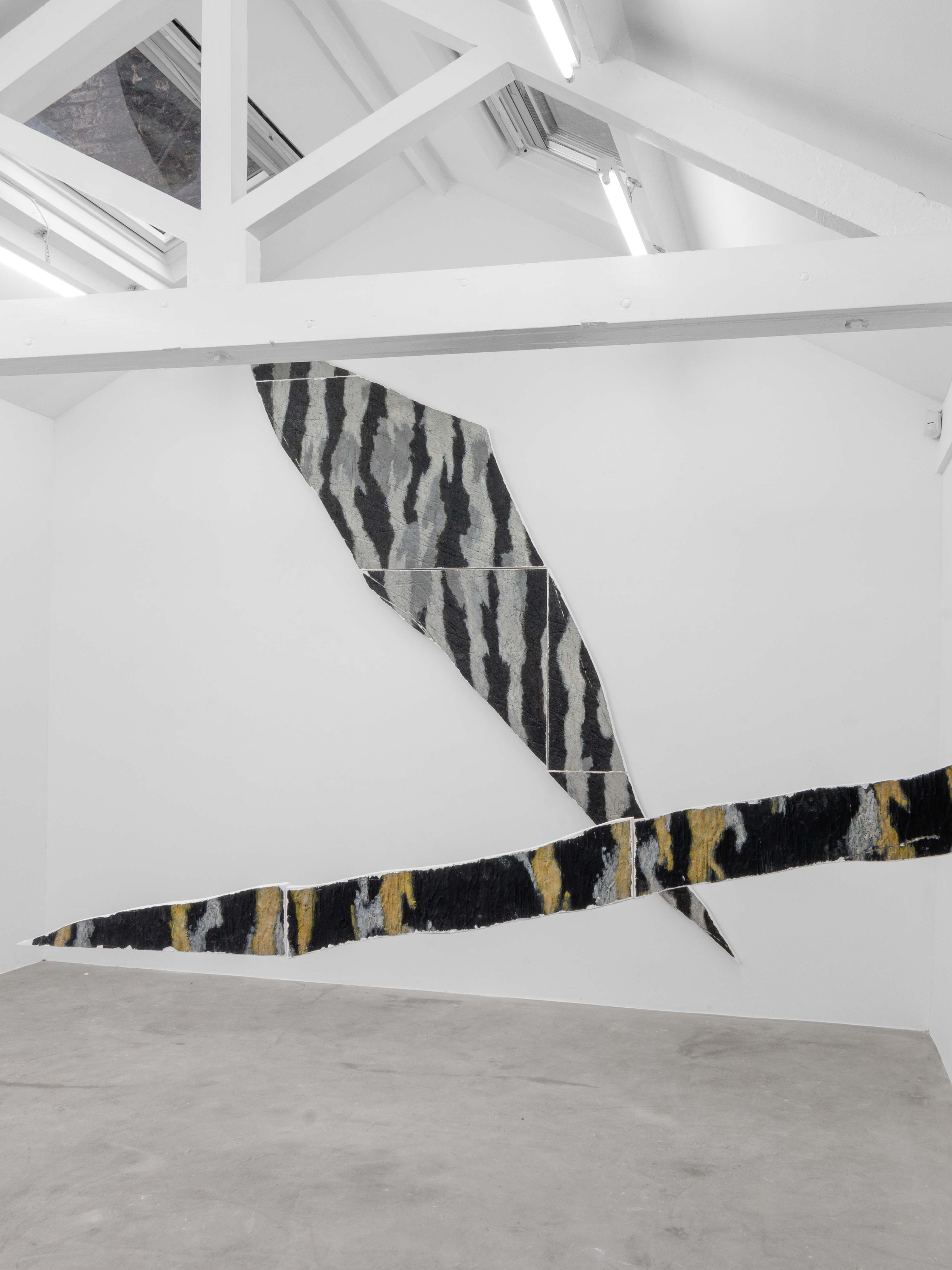
Dardo, 2026 ; encaustic and casein on cement, plaster ; partial view.
Tentación, V. , 2026 ; encaustic and casein on cement, plaster.
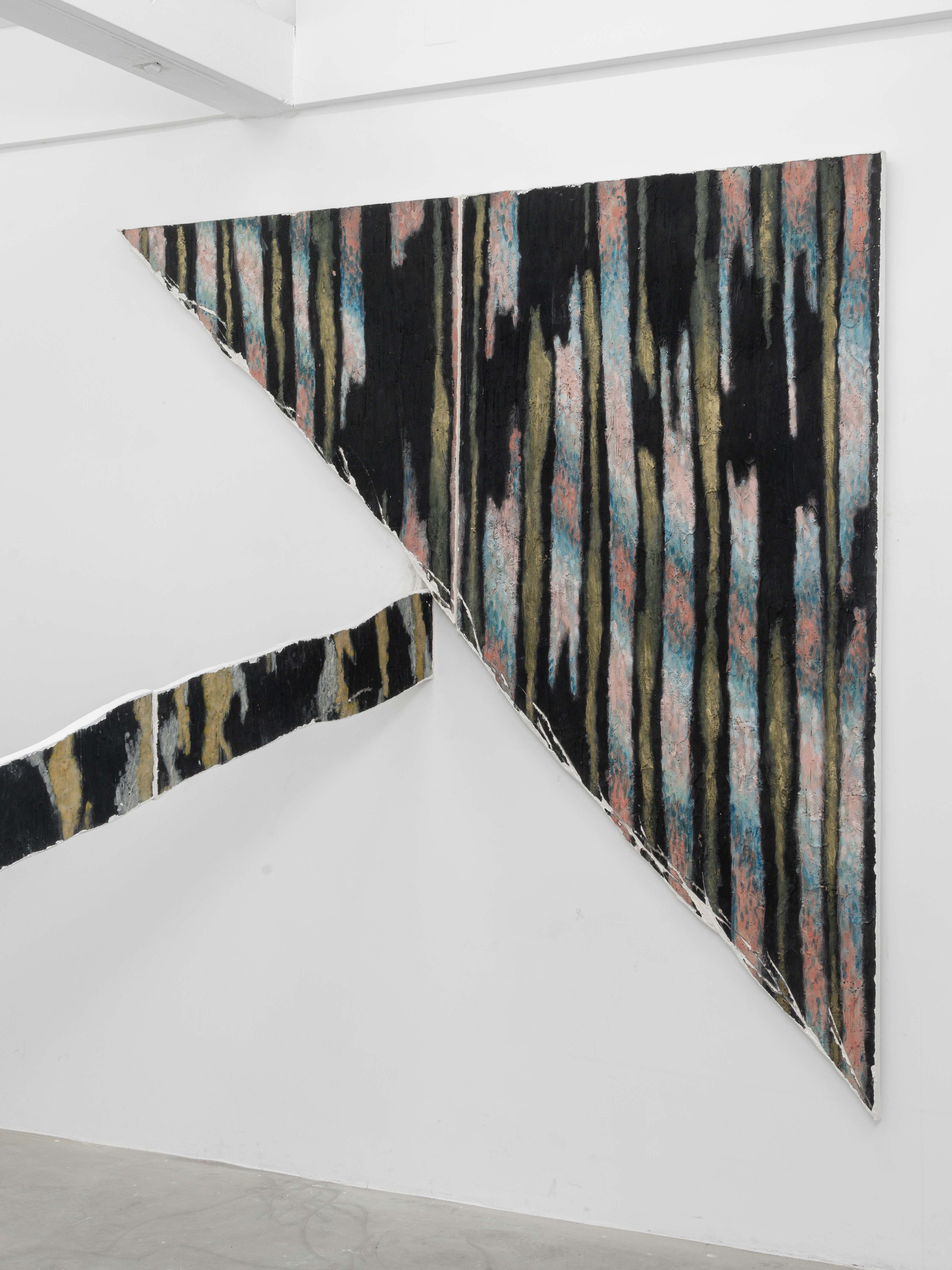
Dardo ; partial view.
U-Wing, 2026 ; encaustic and casein on cement, plaster.
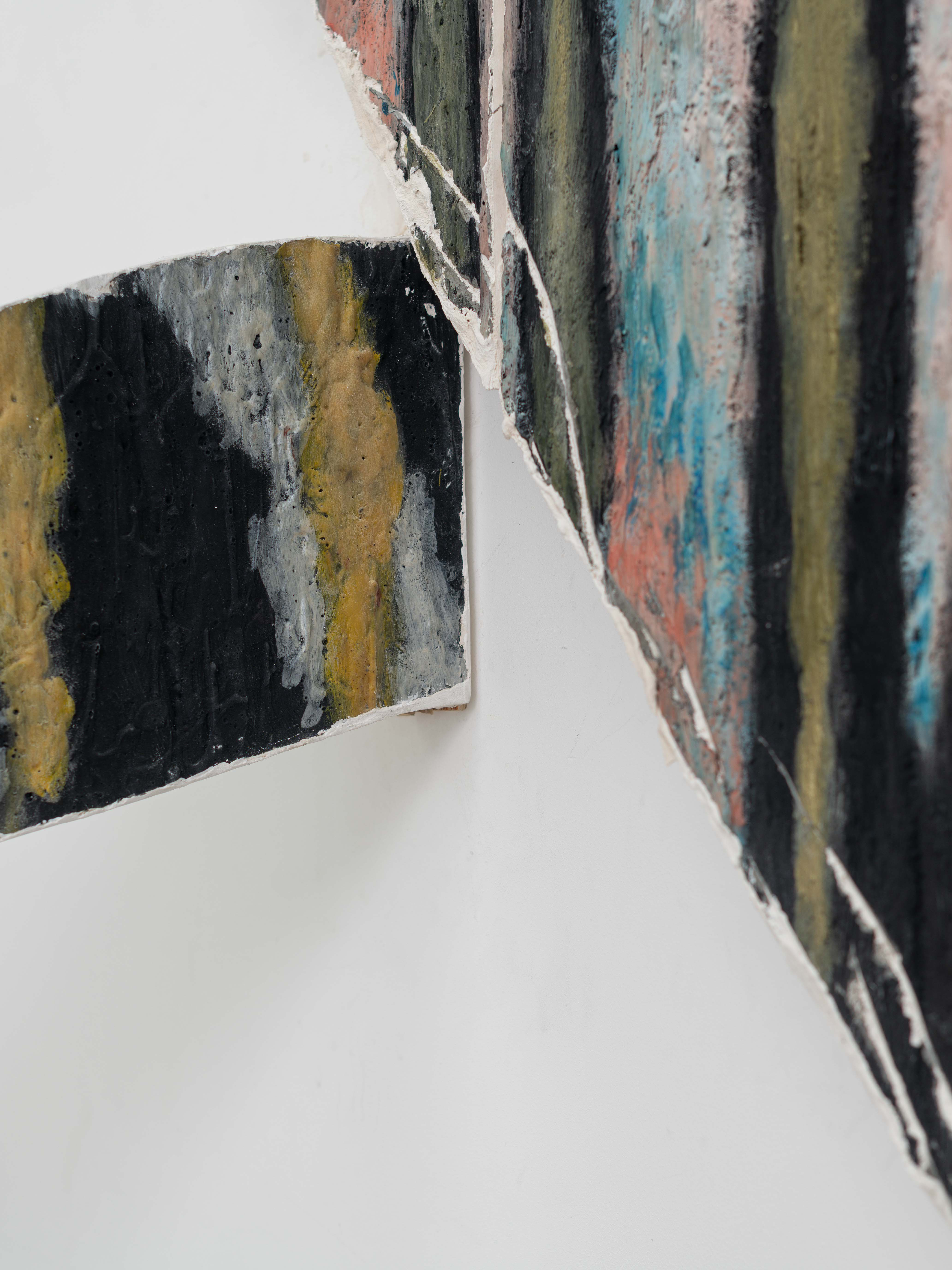
Dardo, U-Wing ; detail.
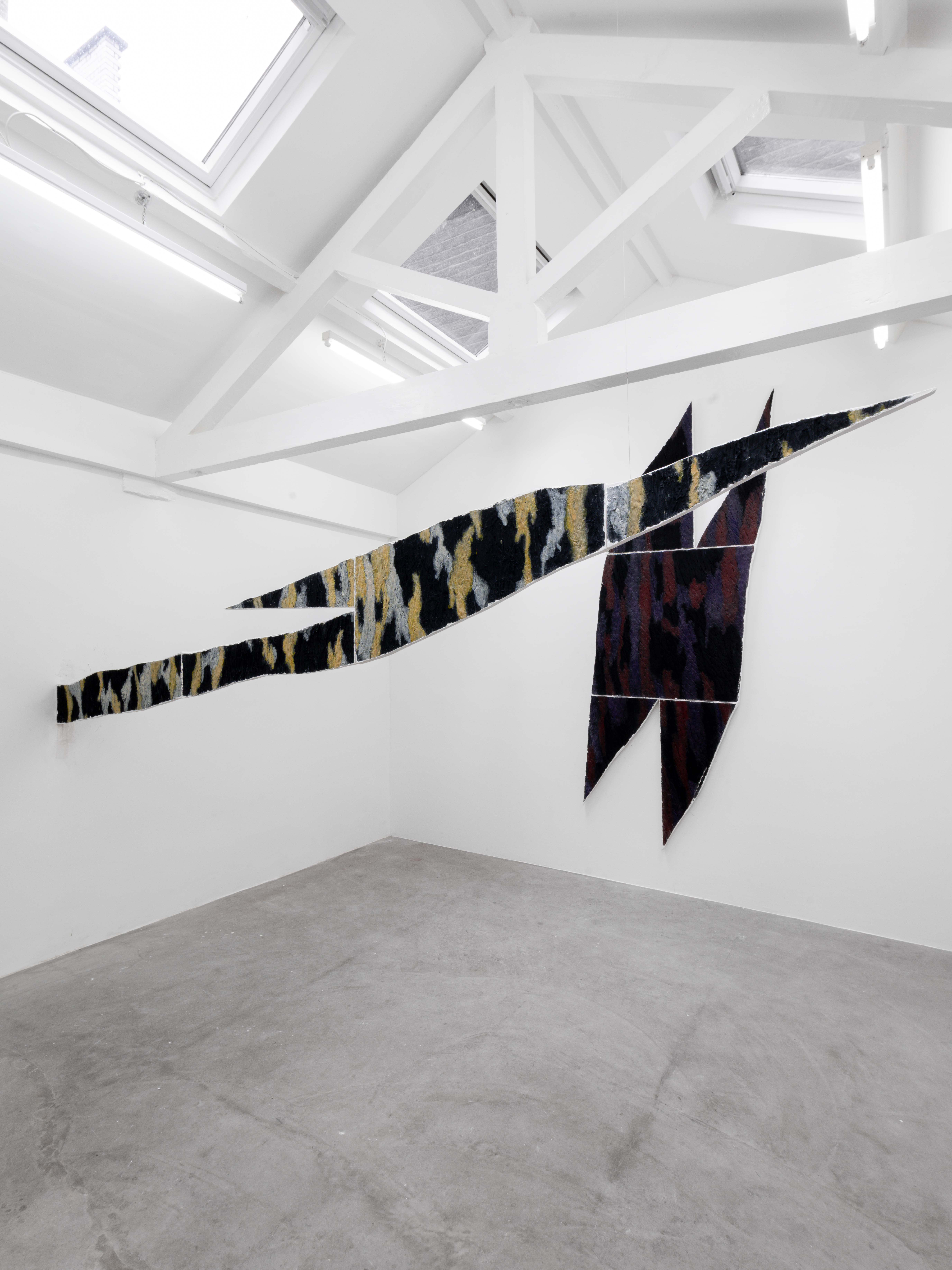
Dardo ; Liebana’s Bat ; installation view.
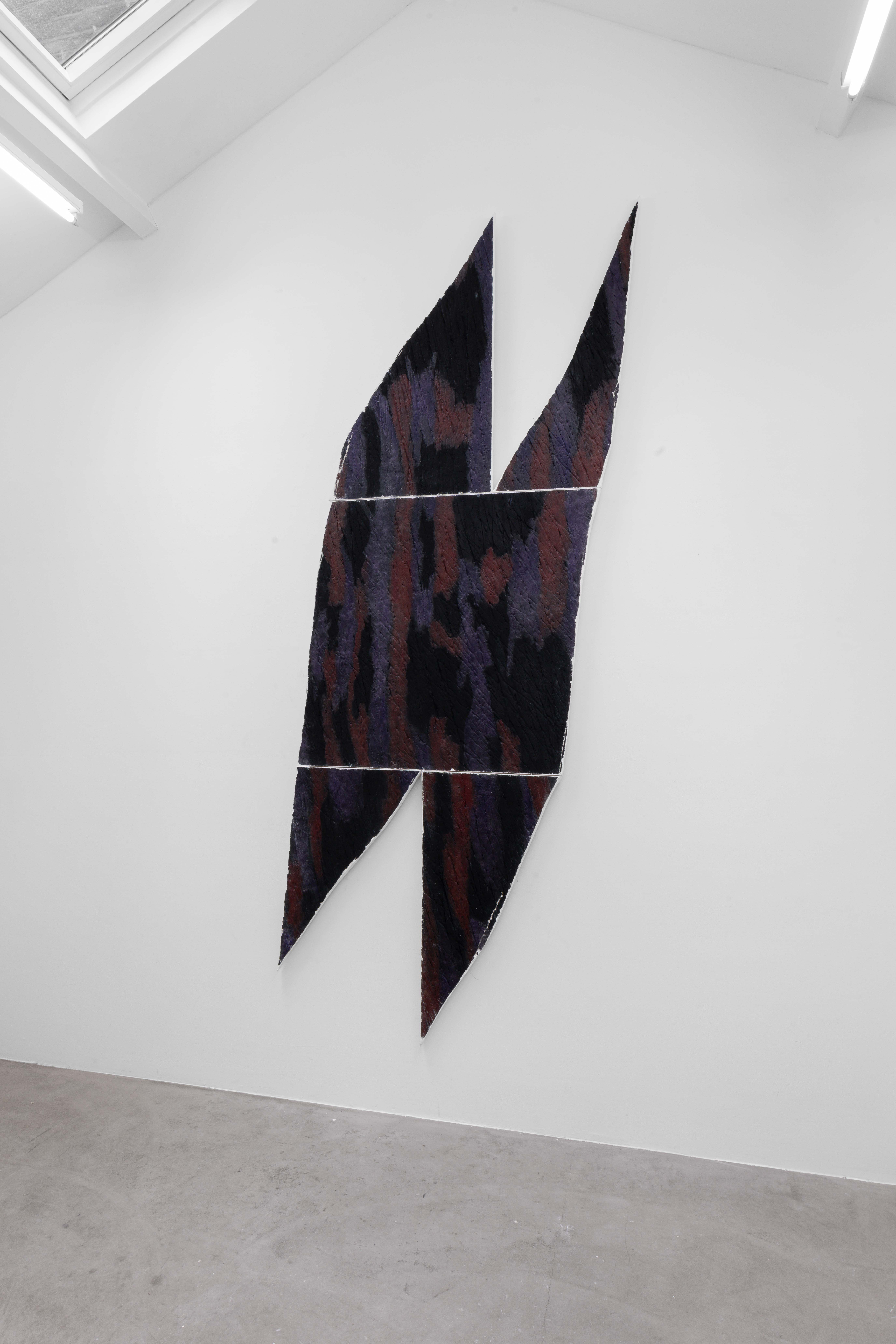
Liebana’s Bat, 2026 ; encaustic and casein on cement, plaster.
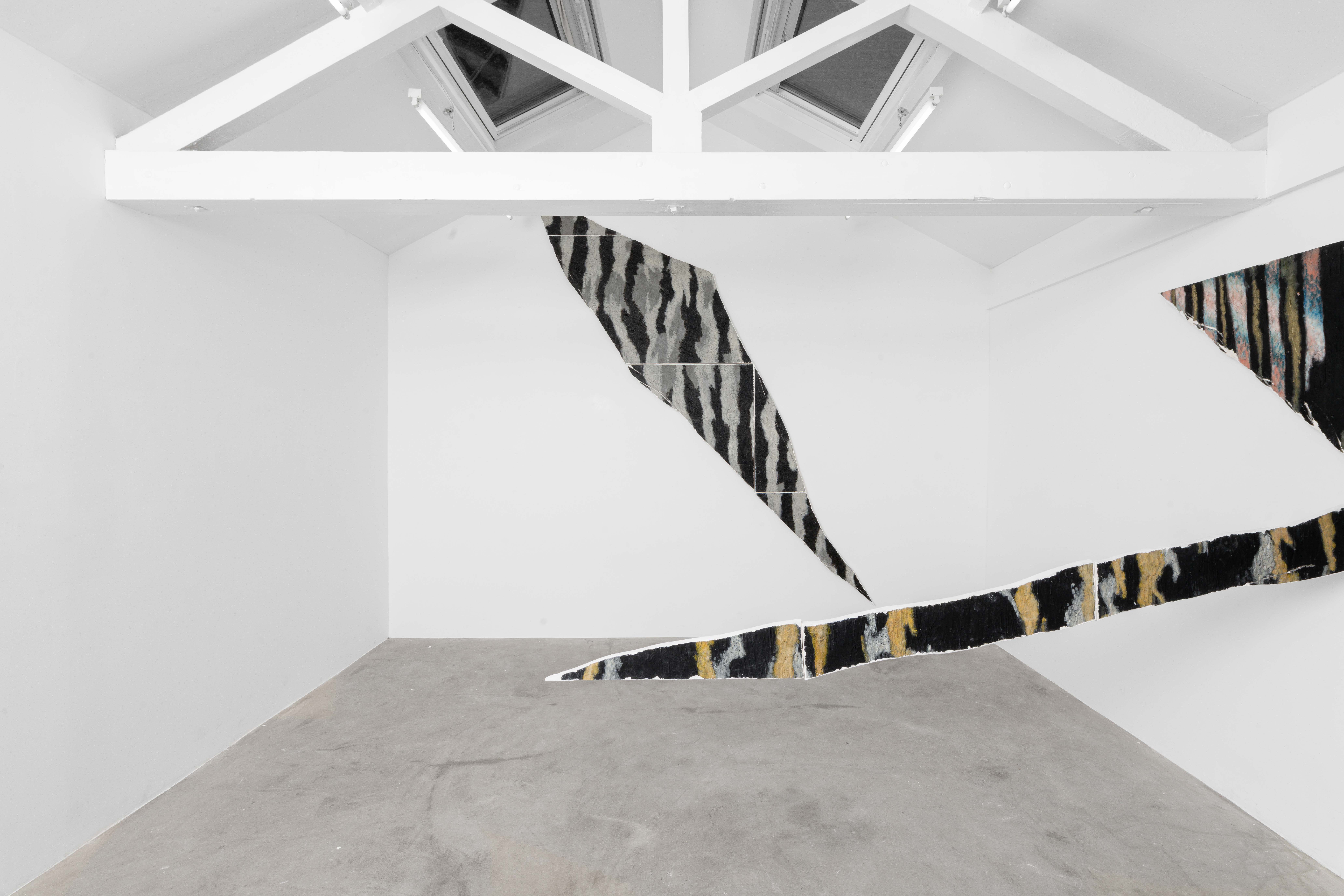
Tentación. V. ; Dardo ; U-Wing; installation view.
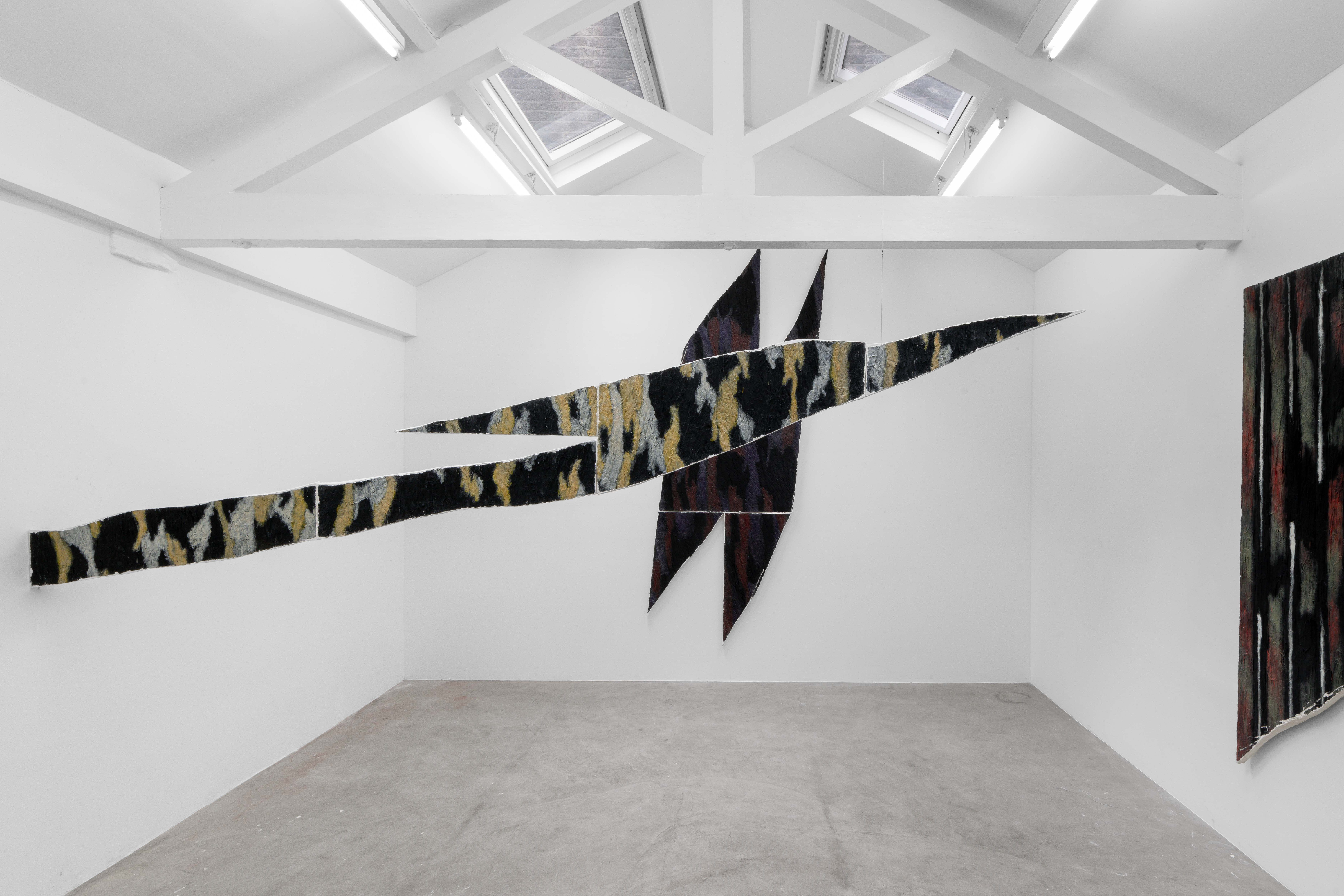
Dardo ; Liebana’s Bat ; Furcifer ; installation view.
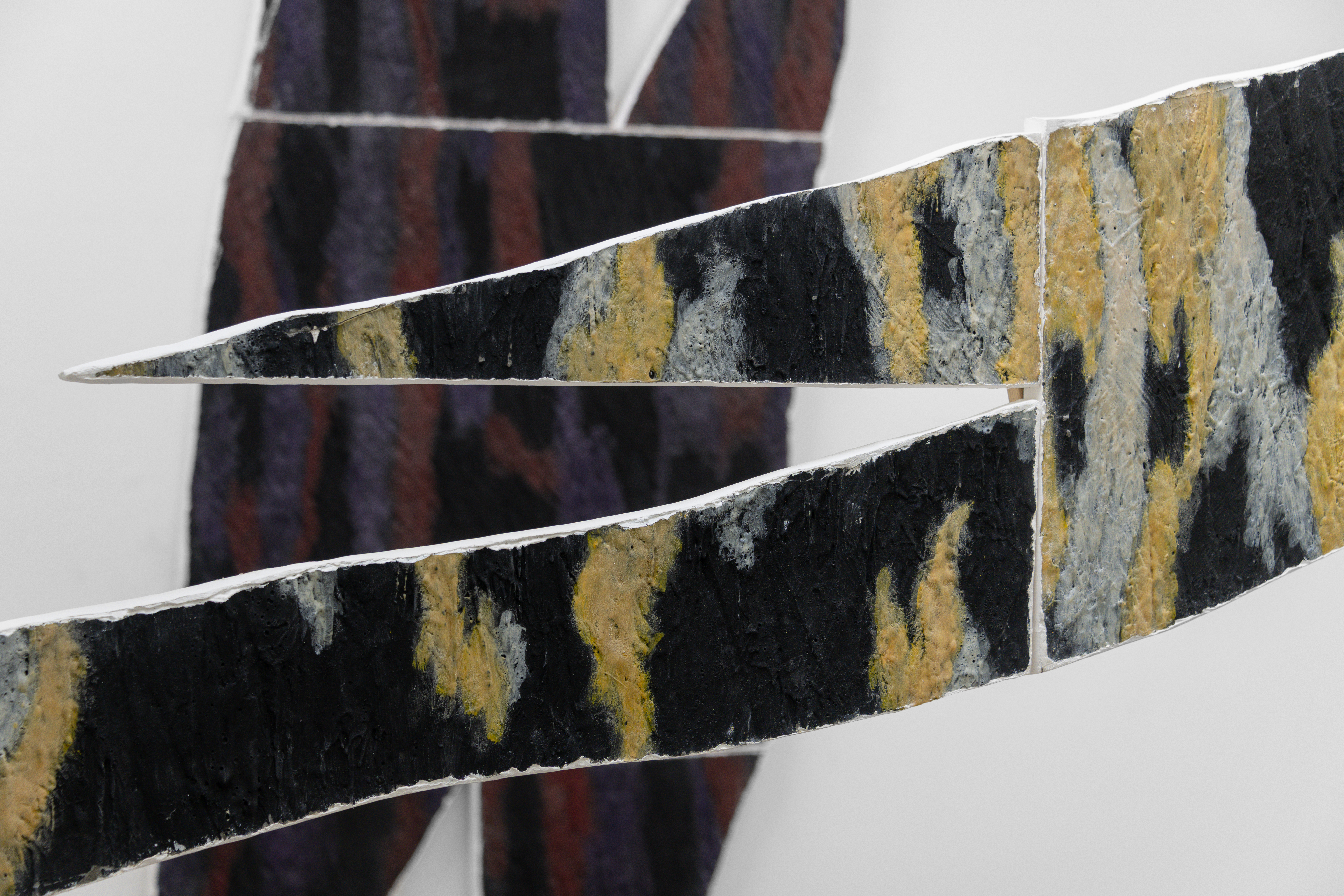
Dardo ; Liebana’s Bat ; detail.
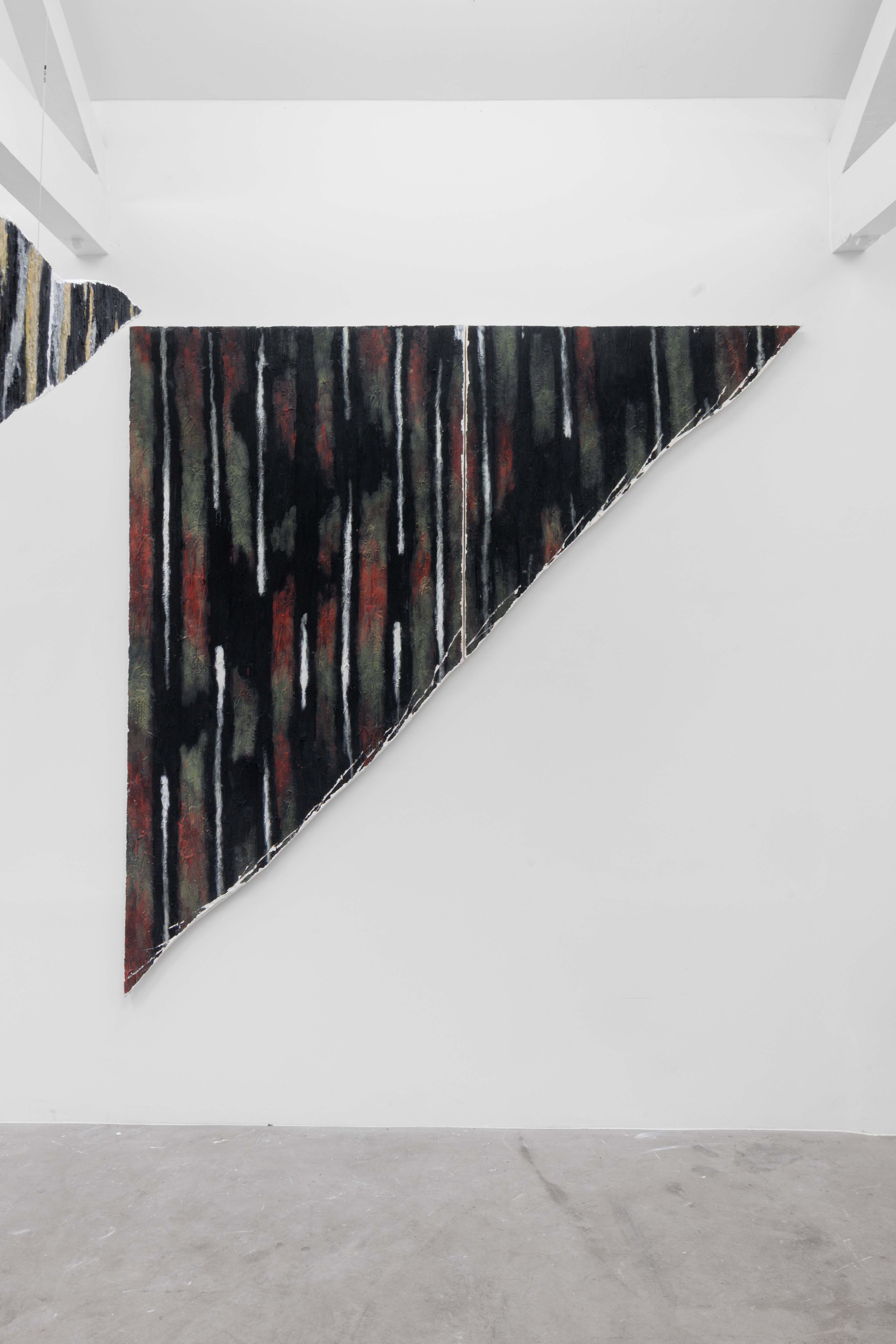
Furcifer, 2026 ; encaustic and casein on cement, plaster.
 Mateo Revillo